The Self-Healing GuideScott Rauvers · 2026 Edition Buy the book
The Remineralization Atlas · Ca(PO)OH · 2026 Edition

Enamel is not inert. It is a ledger.

Minerals leave the crystal and minerals return to it, hour by hour, decided by the pH of the film of saliva sitting on the tooth. Every protocol on this page is an attempt to keep that ledger in surplus.

92%Enamel that is hydroxyapatite
5.5pH where enamel begins dissolving
0.5µg/mL — strongest botanical MBC
~700Citations behind the source text
Begin at the mechanism
01 — The Mechanism

The crystal keeps score.

Remineralization is already happening in your mouth. Calcium and phosphate ions dissolved in saliva redeposit into the hydroxyapatite lattice whenever conditions allow it — an ionic exchange, running constantly, in both directions. Below a critical pH of roughly 5.5 the exchange runs net negative and the crystal gives up mineral. Above it, the crystal takes mineral back. Drag the pH. Watch the lattice answer.

Enamel surface · cross-section · live
Remineralizing Saliva is returning calcium and phosphate to the crystal.

Saliva conditions

Set the oral environment and add the agents documented in the source text. The lattice responds in real time.

Integrity100%
Net flux+0.0
Ion pool1.0×
7.0
4.0 acid5.5 critical8.0 alkaline

Cariogenic bacteria ferment carbohydrate into lactic acid, dropping local pH and pulling calcium and phosphate out of the crystal.

Available agents
02 — The Potency Index

Ten plants, ranked by how little it takes.

Streptococcus mutans ferments dietary sugar into the acid that drives the ledger negative. These ten compounds inhibit it — ordered by the lowest concentration at which they do so. The scale is logarithmic; the top of this list is sixty times more potent than the bottom.

◀ Longer bar = potent at lower concentration MIC — minimum inhibitory concentration MBC — minimum bactericidal concentration
03 — The Harvest Wheel

Potency has a season.

A root pulled in dormancy is not the same medicine as the same root pulled in spring. The compounds above concentrate in specific tissues at specific points in the plant's year. Hover an arc to find its window.

04 — The Apothecary

Formulas that outlived their authors.

Three preparations carried forward from the source text — one American herbalist, one French aromatherapist, one kitchen-table protocol maintained across years of daily use.

Western Herbalism · c. 1990

Healing Mouthwash

Rosemary Gladstar — Rosemary's Garden, Sonoma County

  • Water ¾ cup
  • Vodka ¼ cup
  • Calendula tincture 40 drops
  • Goldenseal tincture 40 drops
  • Myrrh tincture 20 drops
  • Peppermint essential oil 1–2 drops

Method Combine and seal in an airtight glass bottle. Use on inflamed gums, or as a daily preventive rinse. The astringent herbs here — peppermint among them — tighten gum tissue against the gumline, narrowing the space bacteria and food debris can enter.

French Aromatherapy · 20th c.

The Valnet Infusion

Dr. Jean Valnet — thirty years in practice

  • Anise seeds 3.5 oz
  • Arnica flowers 1.8 oz
  • Clove buds 0.4 oz
  • Cinnamon 0.4 oz
  • Ginger root 0.4 oz
  • Vodka, 100 proof 34 oz

Method Steep 8–12 days, strain through a coffee filter, store in airtight glass away from light and heat. To use: one teaspoon of the infusion and one teaspoon of raw honey into four ounces of warm water. Rinse two to three times daily after eating. High-proof spirit is required — these astringents will not release into anything weaker.

Daily Maintenance · Rauvers

The Yogurt Protocol

Integrated into diet and maintained across years

  • Blackstrap molasses 2–3 tsp
  • Flax seeds 1 tsp
  • Astragalus 1 tsp
  • Cinnamon 1 tsp
  • Grapeseed extract ½ tsp
  • Coriander seed powder 1 tsp
  • Chia seeds 1 tsp

Method Stir into plain Greek yogurt, sweetened with honey. Use coriander seed powder — the leaf will not carry the flavour. Follow with resveratrol tea if desired: a third of a capsule into boiling water, honey to cut the bitterness. Resveratrol reduces bacterial adhesion to the tooth surface and breaks down established biofilm.

05 — The Daily Rhythm

The ledger is settled in hours, not appointments.

Remineralization needs time above critical pH more than it needs any single heroic intervention. The shape of the day matters more than the contents of the cabinet.

06:00 — 09:00

On waking

  1. Scrape the tongue before anything else — clear the overnight bacterial load.
  2. Warm water rinse to restore neutral pH.
  3. Eggs, sautéed greens in butter, green tea. Fat-soluble vitamins land best with fat.
  4. Wait thirty minutes after any acid before brushing — enamel is briefly soft.
12:00 — 14:00

Midday

  1. Sardines with the bones in, or hard aged cheese — calcium with its phosphate.
  2. Raw fibrous vegetables to drive saliva flow and mechanically clear the surface.
  3. Xylitol gum afterward, ten minutes. This is the acid-clearance window.
  4. Green or oolong tea rather than juice.
18:00 — 20:00

Evening

  1. Bone broth, slow-cooked. Collagen and minerals in the form the body reads easily.
  2. Natto, hard cheese, or liver for vitamin K2.
  3. Close the eating window early — every hour without food is an hour of net repair.
  4. Licorice or clove tea.
21:00 — 23:00

Before sleep

  1. Oil pulling — sesame or flaxseed. Trials found it matched chlorhexidine for plaque-induced gingivitis.
  2. Floss, then brush with nano-hydroxyapatite paste.
  3. Do not rinse afterward. Leave the mineral on the tooth overnight.
  4. Nose-breathe. A mouth that dries out at night cannot buffer anything.
06 — The Clinical Threshold

Know exactly where this stops working.

The honesty of this approach is what makes it usable. Remineralization operates on a specific window — early demineralization, before the surface collapses. Past that line, the chemistry no longer applies, and the source text says so plainly.

Inside the window

Where the crystal can still answer

  • White spot lesions — early demineralization with the enamel surface still intact
  • Dentinal sensitivity from exposed or open tubules
  • Gingivitis: inflamed, bleeding, or receding gum margin
  • Plaque and biofilm accumulation
  • Chronically acidic oral pH and low salivary flow
  • Prevention — by a wide margin the strongest use of everything on this page
Past the threshold — see a dentist

Where no herb on earth reaches

  • A toothache that continues. This is the signal of something more serious
  • Facial or jaw swelling, fever, or a bad taste of discharge — an abscess is an emergency
  • A cavitated lesion: the surface has broken and the structure is gone
  • Fracture, trauma, or a lost restoration
  • Pain on biting, or that wakes you at night
  • Any lesion in a child's tooth — the margin for error is far smaller

“Dentistry is a genuine craft, and the people who practice it are extraordinary at what they do. Faced with acute pain, infection, or structural damage, they solve problems no herb on earth can touch. I want you to have them. Where I part ways is the long horizon.”

Scott Rauvers — Introduction
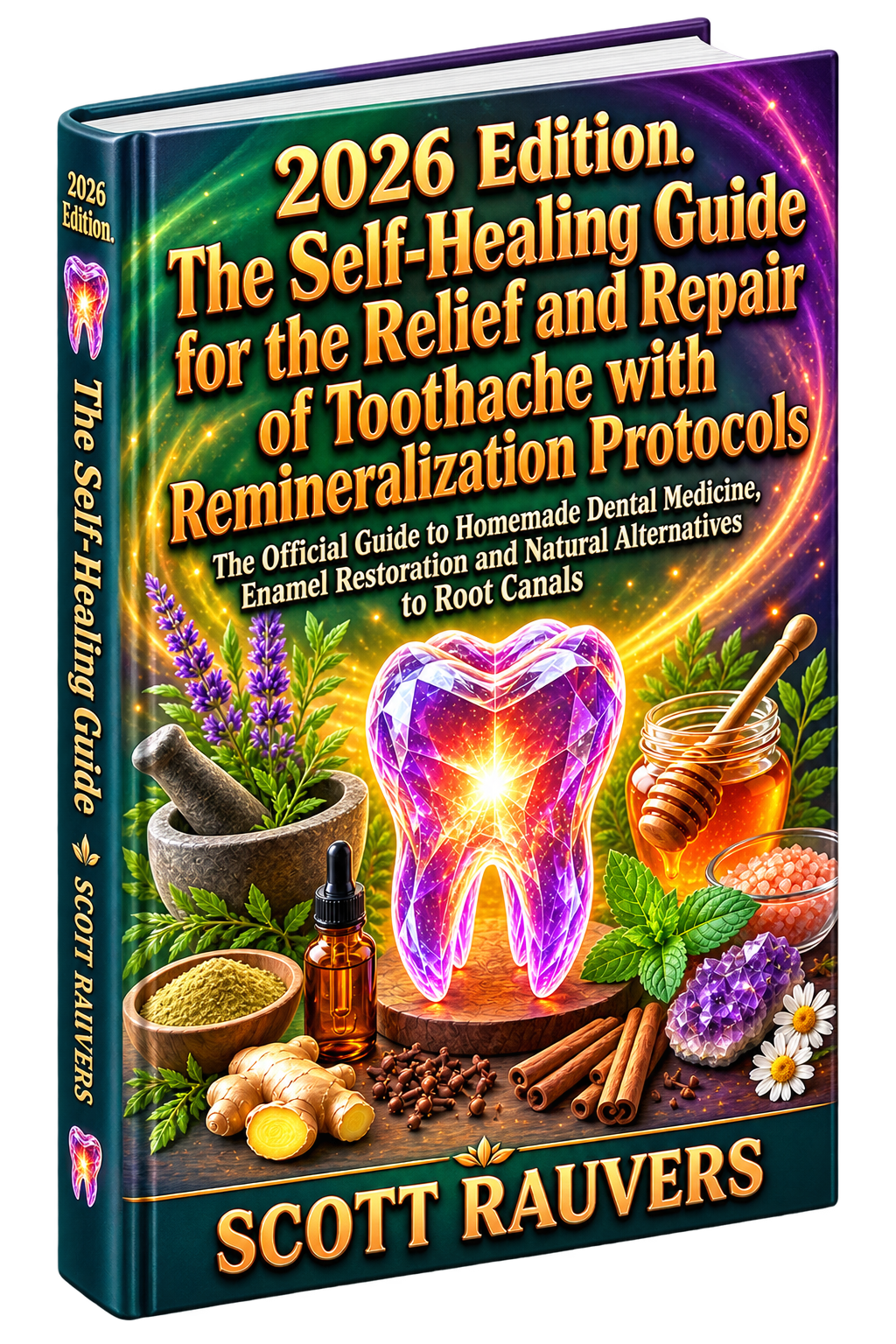
Cover of The Self-Healing Guide for the Relief and Repair of Toothache with Remineralization Protocols by Scott Rauvers, 2026 edition.
2026 Edition · 4th major revision
07 — The Source

Every protocol on this page came from one book.

The Self-Healing Guide for the Relief and Repair of Toothache with Remineralization Protocols — the full text behind this atlas, with the complete formulas, the botanical monographs, the seven-day diet plan, and the citations for every claim made here.

The subtitle runs: The Official Guide to Homemade Dental Medicine, Enamel Restoration and Natural Alternatives to Root Canals. Nearly ten years of research condensed into one working reference — what Ayurveda, Chinese medicine and European folk practice used for aching teeth, and what the published science says about each of them, citation by citation.

Color Hardcover Paperback Kindle Audiobook
506Pages
39Chapters
~700Citations
2026Edition
9798193584780ISBN

Most people meet their teeth only after something has gone wrong

By the time a tooth throbs, the decision has usually narrowed to a chair, a drill and an invoice. What happens in the years before that point — the minerals in your diet, the pH in your mouth, the bacteria on your enamel, the saliva you do or don't produce — is where most of the leverage lives, and it is the part almost nobody hands you a manual for.

That gap is what this book fills. It is written for the person who wants to understand the mechanism, not just follow instructions: how Streptococcus mutans actually dissolves enamel, how remineralization works chemically, which plants have measurable activity against oral pathogens, and at what concentrations.

And for the person who can't simply "go to the dentist"

Rauvers writes for readers who live far from a clinic, who dread the chair, or who want to arrive at an appointment able to ask sharper questions. The book's stated aim is informed judgement — including a section devoted to recognising when a problem is beyond home care and needs a professional.

On when to see a dentist

The book includes explicit guidance on when the reader should see a dentist, and treats the holistic route as appropriate only where it is genuinely sufficient. Nothing here replaces professional diagnosis. Severe or spreading pain, facial swelling, fever or difficulty swallowing are urgent — seek care immediately.

08 — Inside the Book

Three things you walk away with.

Not slogans — a routine, a rationale, and a reference you keep on the shelf.

Something to do tonight

Chapter 19 is a step-by-step chapter on immediate action for an aching tooth: numbing herbs, poultices you can assemble at home, acupressure points, and hour-by-hour daily routines from waking to bed.

The nutrition behind enamel

Whole chapters on calcium bioavailability, the calcium-to-phosphorus ratio, vitamins A, D and K2, manganese, silica and magnesium — with food lists, mineral ratio tables and a seven-day remineralization diet plan.

A reference you can check

Roughly 700 citations to peer-reviewed studies, a full index, and a quoted-references section, so every claim can be traced back to its source rather than taken on trust.

What you'll learn

The book moves from mechanism to material to protocol. A sample of the ground it covers:

How decay actually begins

Biofilm formation, hydrophobicity, obligate anaerobes, and the specific bacteria implicated in cavities, gingivitis and periodontitis.

How remineralization is measured

Hydroxyapatite and nano-hydroxyapatite gels, CPP-ACP, bioactive glass toothpastes, silver fluoride, and a paste the book reports at a 95% success rate.

Dentin regeneration research

The evidence around grape seed extract, bakuchiol, carnosine, peptides and magnetic field plus nano-chitosan approaches to rebuilding dentin.

The fluoride debate, both sides

Fluoridation cessation studies from Canada, Finland, Germany and Cuba, geographic and volcanic fluoride exposure, and foods and teas naturally high in fluoride.

Gums, abscesses and ulcers

Propolis, myrrh, goldenseal, niacin, clays and resins for abscesses; cranberry and probiotic rinses benchmarked against chlorhexidine; canker sore salves.

What's coming next

A plain-language review of anti-cavity vaccine research — protein, nanoparticle, mRNA and DNA platforms — plus the Lumina BCS3-L1 microbial replacement probiotic.

Chapter 22 — the ranked inhibitors of S. mutans plotted in the potency index above — carries its own section on observations and limitations, noting that the evidence base thins sharply beyond the Petri dish. That caveat is the book's, not an afterthought added here; it is written to be argued with.

09 — The Materia Medica

Ninety of the several hundred substances catalogued inside.

Every entry below is a named heading in the table of contents. Each arrives with its traditional use, the studies behind it, and where relevant its part used and effective concentration.

  • Sea Moss Chondrus crispus
  • Rosemary
  • Aloe Vera
  • Marine collagen
  • Gallic acid
  • Galla Chinensis
  • Green and white tea
  • Oolong tea
  • Xylitol
  • Erythritol
  • Allulose
  • Luo Han Kuo Siraitia grosvenorii
  • Stevia
  • Carob
  • Curry leaf
  • Olive leaf powder
  • Wintergreen Gaultheria procumbens
  • Propolis
  • Myrrh
  • Goldenseal
  • Frankincense Boswellia sacra
  • Neem
  • Miswak Salvadora persica
  • Pomegranate Punica granatum
  • Licorice root Glycyrrhiza glabra
  • Chamomile Chamomilla recutita
  • Ceylon cinnamon
  • Peppermint
  • American cranberry
  • Ginkgo biloba
  • Salacia reticulata
  • Lemongrass
  • Scutellaria baicalensis
  • Plumbagin
  • Horsetail Equisetum arvense
  • Holy basil Ocimum tenuiflorum
  • Star anise Illicium verum
  • Cardamom Elettaria cardamomum
  • Fenugreek Trigonella foenum-graecum
  • Witch hazel Hamamelis virginiana
  • Cranesbill Geranium maculatum
  • California poppy Eschscholzia californica
  • Yerba Buena Satureja douglasii
  • Plantain Plantago major
  • Sweetgum Liquidambar styraciflua
  • Prickly ash bark
  • Yerba mansa
  • Echinacea
  • Spilanthes
  • Comfrey root
  • White oak bark
  • Pau d'Arco bark
  • Calamus Acorus americanus
  • Calendula Calendula officinalis
  • Rooibos Aspalathus linearis
  • Bloodroot
  • Coconut oil
  • Bentonite clay
  • French green clay
  • Zeolite
  • Shilajit
  • Bamboo salt
  • Himalayan salt
  • Teff
  • Purslane Portulaca oleracea
  • Mastic gum Pistacia lentiscus
  • Acacia nilotica
  • Rubia cordifolia
  • Sumac Rhus coriaria
  • Ginger Zingiber officinale
  • Chinese goldthread Coptidis rhizoma
  • Japanese knotweed Polygonum cuspidatum
  • Garcinia kola
  • Nutmeg
  • Coriander seeds
  • Black cumin Nigella sativa
  • Grape seed extract
  • Resveratrol
  • Curcumin
  • Bakuchiol
  • Xanthorrhizol
  • Carnosine
  • CoQ10
  • Vitamin K2
  • Naringin
  • Apigenin
  • Quercetin
  • Bromelain
  • Chia seeds
  • Flaxseed
  • Eggshell calcium
  • Cuttlefish powder

Plus cell salts, essential oils, tooth powders, mouth rinses and named historical formulas from Rosemary Gladstar, Jean Valnet, Jethro Kloss, Michael Moore, Dr. Christopher and Jakob Lorber.

10 — The Contents

Thirty-nine chapters, plus an extended introduction.

The introduction alone covers the history of modern dentistry, dental amalgam and mercury, the countries that have banned mercury fillings, what causes cavities, and when to see a dentist.

  1. An Overview of Oral Health and Diet
  2. Why Communities are Beginning to Ban Fluoride in Drinking Water
  3. The Pioneering Work of Dr. Melvin Page
  4. The Facts about Periodontitis and Methods for Preventing it
  5. My Personal Journey
  6. Manganese for Strong and Healthy Teeth
  7. Herbs, Supplements and Methods for Enhancing the Body's Absorption of Calcium
  8. Simple and Effective Herbal Formulas for Healthy Teeth and Gums
  9. Keeping the Gums Healthy
  10. How Probiotics Contribute to Strong, Healthy Teeth
  11. Herbs for Strong and Healthy Teeth
  12. Lifestyle, Sugar and Dental Health
  13. The Importance of Vitamins A, D and K
  14. Does Prescription Medicine Contribute to Toothaches?
  15. Foods and Lifestyles that Contribute to Toothaches
  16. How Environment Influences Dental Health
  17. Probiotics and Supplements for Tooth Regeneration
  18. Oil Pulling for Strong Healthy Teeth
  19. Actions to Take Immediately if you Have a Toothache
  20. Methods for Defeating Bad Bacteria that Causes Cavities
  21. Proven Techniques and Methods for Naturally Healing Dental Abscesses
  22. Foods and Herbs that Naturally Inhibit Streptococcus mutans
  23. Cell Salts for the Natural Relief of Severe Toothache
  24. Using Mental Imagery to Eliminate or Manage Toothache Pain
  25. Herbal Remedies for Inflamed and Bleeding Gums
  26. The Complete Master Herbal List of Herbs for Alleviating Toothaches
  27. Nutrient Food Ratios
  28. The Latest Anti-Cavity Vaccines
  29. How to Make Your Own Internal Detox Formula using Zeolite
  30. A Simple Diet Plan for Dental Health
  31. Herbal Mouth Ulcer and Canker Sore Remedies
  32. Jakob Lorber's Sun Remedy
  33. Meta Data Analysis Studies of Tooth Remineralization and Dental Health
  34. Environment and Dental Health
  35. Food Mineral Nutrient Ratios
  36. How to Make Your Own Zeolite Detox Formula
  37. A Review of the Process of Natural Tooth Remineralization
  38. Reviews of the Best Toothpastes that Strengthen Tooth Enamel and Remineralize Teeth
  39. Nine 100% All Natural Sugar Substitutes

Closing with quoted references and a complete index

Portrait photograph of author Scott Rauvers Scott Rauvers' handwritten signature
11 — The Author

Scott Rauvers

Rauvers is the founder of The Institute for Solar Studies on Behavior and Human Health, and this book represents close to a decade of research and personal practice — a journey he documents directly in Chapter 5 rather than keeping at arm's length.

That background shows up in places you would not find in a conventional dental text. Two full chapters examine how environment shapes oral health: solar weather, dew point, ultraviolet-B exposure and vitamin D status, seasonal variation in plaque, gingivitis and toothache, and the yearly cycle of tooth vulnerability. It is the same investigative habit applied to the mouth.

His method throughout is to name the source. Historical practitioners are cited by name — Weston Price, Melvin Page, Howard Hawkins, Edward Mellanby — and modern claims are anchored to published studies, gathered in a quoted-references section at the back.

Visit the author's website →

12 — The Reader

This book is written for you if…

You live far from a clinic

Distance, cost or availability makes routine dental care difficult, and you want a well-sourced reference on your own shelf.

You dread the chair

Dental anxiety has kept you away, and you want to replace avoidance with understanding — including a clear sense of when professional care is genuinely needed.

You want the evidence

You are a herbalist, nutritionist, naturopath or serious autodidact who wants concentrations, ratios, study citations and stated limitations, not folklore.

13 — The Editions

Choose your format.

The 2026 Edition is available in four formats. At 506 pages with an index you will return to, most readers reach for the print editions — but every version carries the full text.

Hardcover 2026 Edition · 506 pages
Buy hardcover on Amazon
Paperback 2026 Edition · 506 pages
Buy paperback on Amazon
Kindle Searchable digital edition
Buy Kindle edition on Amazon
Audiobook Listen on the go
Get audiobook on Amazon
14 — Before You Buy

Questions worth asking first.

Can I read part of it before committing?

Yes. The first three chapters are available as a free PDF preview: download the preview edition. That covers the introduction, the overview of oral health and diet, and the chapter on fluoride in drinking water.

How long is it, and is it a reference or a read-through?

Both. It runs 506 pages across 39 chapters, and it closes with a complete index and a quoted-references section — so it works as a cover-to-cover read and as something you consult by symptom, herb or nutrient.

Is this actually referenced, or is it anecdote?

The book cites roughly 700 references from peer-reviewed published studies. Several chapters are structured as meta-data analyses, and Chapter 22 gives minimum inhibitory concentrations for named compounds. It also states its own limitations where in-vitro results have not been reproduced in living subjects.

Does this tell me to avoid the dentist?

No. The book includes a section on when the reader should see a dentist, and the author states he prefers the holistic route where it is genuinely sufficient. It is written to make you a better-informed patient, not an absent one. Severe pain, swelling, fever or difficulty swallowing need professional care without delay.

Which edition is this?

The 2026 Edition, ISBN 9798193584780, published in hardcover, paperback, Kindle and audiobook.

Do I need to buy exotic ingredients to use it?

Many chapters build on ordinary foods — cheese, yogurt, tea, dark chocolate, olives, raisins, seeds, eggshells and coconut oil — alongside a shopping list, a seven-day remineralization diet plan and reviews of commercially available remineralizing toothpastes and gels.

Start with the mouth you already have.

506 pages. 39 chapters. Roughly 700 citations. One shelf-ready reference for taking oral health seriously between appointments.